




In industrial production, commercial buildings, and public facility management, floor slip resistance is often overlooked until incidents such as workplace slips, unstable equipment operation, or unsafe walkways occur.
For factory managers, construction contractors, and safety equipment distributors, Anti-Slip Safety Tape is more than just an auxiliary flooring material. It is an important component of everyday workplace safety management.
In particular, for staircases, equipment operating platforms, warehouse aisles, ramps, and wet areas, selecting the right anti-slip tape requires more than evaluating surface friction. Buyers should also consider material abrasion resistance, adhesive stability, installation compatibility, and long-term operating costs.
For businesses with bulk purchasing requirements, the real priority is understanding how to select anti-slip products with reliable performance, suitable specifications, and consistent supply according to different application conditions.
1. Anti-Slip Tape Purchasing Decisions Should Start with Actual Safety Requirements
Slip-resistance requirements vary significantly from one application to another. A single product should not be assumed to meet every application requirement.
For example, industrial production workshops may be exposed to oil, dust, and frequent movement of personnel and equipment. Staircases in commercial buildings place greater emphasis on pedestrian safety and visual identification. Swimming pools and shower rooms, on the other hand, require careful consideration of how prolonged moisture exposure may affect adhesive bonding performance.
These operating conditions determine the combination of performance characteristics required from anti-slip tape.
From a procurement perspective, buyers should clarify three key factors before selecting a product:
First, the frequency of use in the target area. Staircases, walkways, and operating platforms with heavy daily foot traffic require particular attention to the abrasion resistance of the anti-slip surface particles.
Second, whether the floor is exposed to specific contaminants. If the application environment involves oil, water, or cleaning agents, buyers should further confirm the product’s suitability under those conditions.
Third, how long the tape needs to maintain stable performance. In factories, shopping centers, and public buildings operating over extended periods, frequent replacement of anti-slip tape increases labor and material procurement costs.
Therefore, buyers should not focus exclusively on the initial purchase price. Overall product suitability should be evaluated in relation to the intended service period and actual application conditions.
2. Silicon Carbide Anti-Slip Particles Are an Important Factor Affecting Product Performance
The surface structure of anti-slip tape directly influences the frictional contact between the tape and footwear.
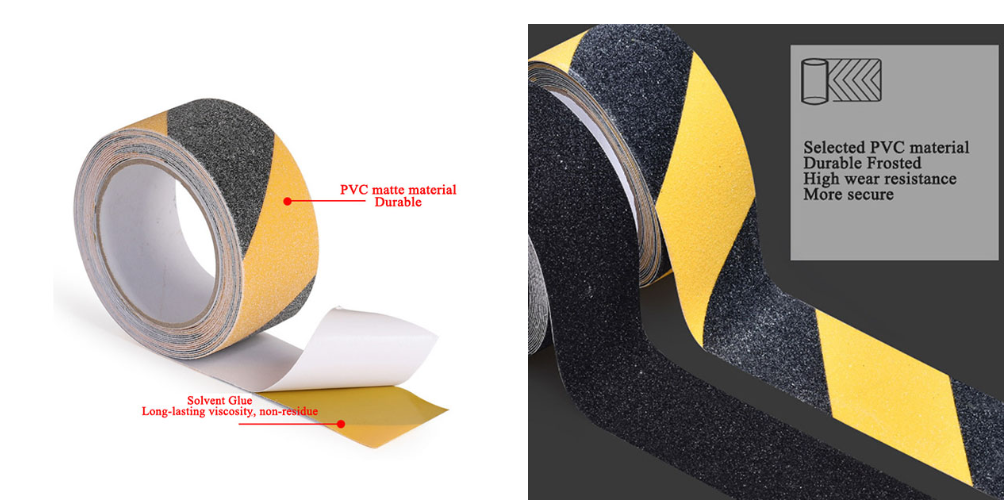
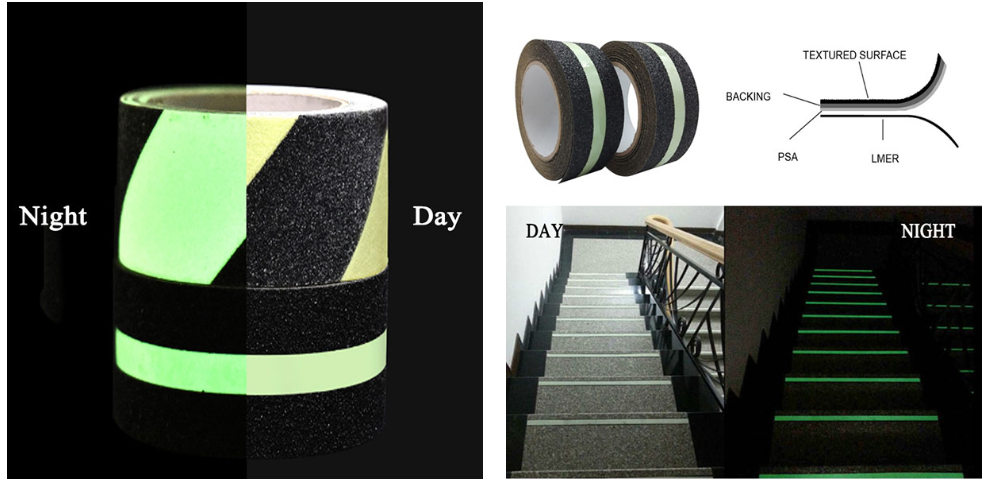
Shanghai Newera’s Anti-Slip PVC Safety Tape uses hard, abrasion-resistant silicon carbide particles as its surface anti-slip material. These particles are embedded in a high-strength, weather-resistant plastic film backing.
Silicon carbide has a high level of hardness and is commonly used in industrial anti-slip materials to create textured surfaces that provide friction.
Unlike ordinary smooth PVC tape, this particle-based anti-slip construction creates a more pronounced surface texture, making it suitable for areas where increased surface friction is required.
For buyers, it is important to look beyond whether the particles are visibly prominent. Other factors include whether the particles are evenly distributed, whether the surface structure remains stable, and whether the particles are likely to detach after prolonged foot traffic.

In factories, warehouses, and commercial public areas, anti-slip materials are continuously exposed to friction caused by pedestrian traffic. Therefore, the abrasion resistance of the surface material is an important consideration during product selection.
3. Why Is Adhesive Performance Equally Important for Anti-Slip Tape?
When selecting anti-slip tape, many buyers focus primarily on the surface particles while overlooking the bonding stability between the adhesive layer and the floor.
In practice, even if the surface provides the required anti-slip performance, edge lifting, partial detachment, or overall movement during use can create additional safety hazards.
Shanghai Newera’s product features a pressure-sensitive adhesive construction with strong initial tack, allowing it to be applied quickly to a variety of suitable surfaces.
According to the technical specifications published on the product page, its main parameters include:
| Technical Parameter | Product Specification |
|---|---|
| Product Model | XSD-FH |
| Product Thickness | 0.75 mm |
| Initial Tack (Rolling Ball Method) | ≥ No. 11 |
| Holding Power | ≥ 24 hours |
| 180° Peel Adhesion | ≥ 9 N/25 mm |
| Tensile Strength | ≥ 50 N/cm |
| Elongation at Break | ≥ 30% |
The above figures are published product specifications. The applicable test methods and testing conditions should be confirmed through the supplier’s official technical documentation.
These parameters help buyers evaluate product performance from different perspectives:
- Initial tack indicates the adhesive’s ability to bond to a surface upon initial contact.
- Holding power evaluates the tape’s resistance to displacement under sustained loading conditions.
- Peel adhesion measures the force required to separate the tape from the substrate.
- Tensile strength and elongation at break provide additional information about the tape’s mechanical properties when subjected to stress.
For anti-slip products intended for long-term use, surface friction performance and adhesive bonding performance must be considered together. Product quality should never be judged by a single parameter alone.
4. How Do Customization Requirements Differ Across Anti-Slip Tape Markets?
For overseas importers, wholesalers, and brand owners, purchasing anti-slip tape is not simply about finding a product that meets basic requirements. Buyers must also consider subsequent sales, distribution, and project delivery needs.
Different customer groups may focus on the following customization options:
Customized Product Specifications
Tape width, length, and thickness can be adjusted according to the intended application. For example, stair treads, equipment platforms, and narrow walkways may require different tape dimensions.
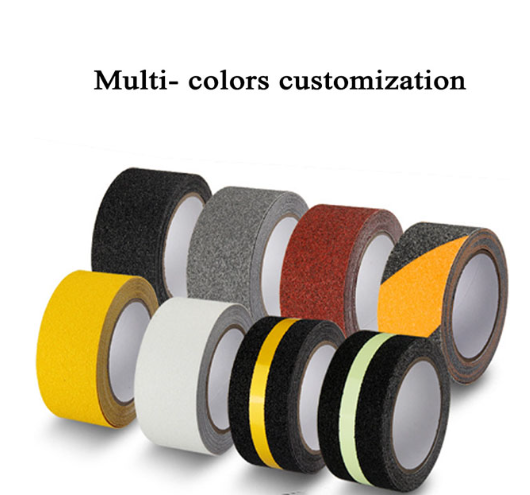
Customized Colors and Appearance
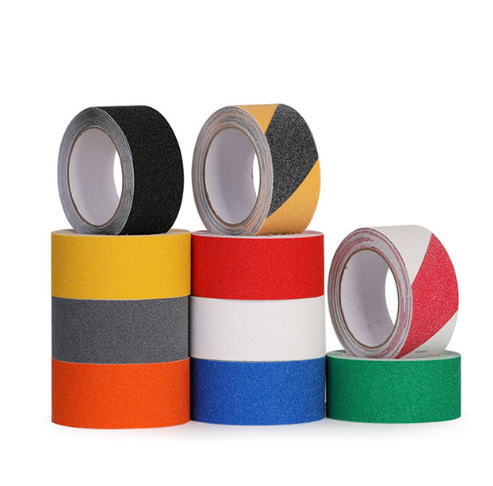
Different colors, such as black, yellow, and black-and-yellow combinations, can meet the visual identification requirements of different applications. Distributors with their own brand positioning can also discuss additional appearance configurations.
Surface Materials and Construction Options
Different operating environments may require different anti-slip particle materials, backing constructions, and surface textures. For specialized projects, buyers are advised to provide the intended application and performance targets in advance so that the supplier can evaluate feasible product configurations.
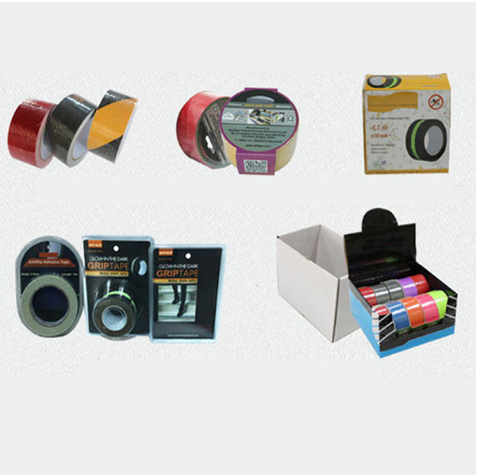
Packaging and Private-Label Customization
For importers, wholesalers, and private-label customers, product packaging is also an important part of the procurement process.
Packaging requirements can be discussed according to the target market, including individual roll packaging, product labels, carton specifications, and OEM brand identification.
Shanghai Newera can provide corresponding customization services based on actual purchasing requirements, helping align product specifications with sales channels, engineering projects, and brand positioning.
5. Why Choose a Tape Manufacturer with Multi-Category Supply Capabilities?
For B2B buyers, a supplier’s value is not limited to an individual product. It also depends on product development capabilities, specification adjustments, bulk supply capacity, and the ability to support long-term cooperation.
Shanghai Newera (Newera Viscid Products Co., Ltd.) has long focused on industrial adhesive materials. Its product portfolio includes PVC Anti-Slip Tape, BOPP packaging tape, double-sided tape, foam tape, masking tape, aluminum foil tape, copper foil tape, PVC Electrical Insulation Tape, warning tape, and other product categories.
This diversified product portfolio can support combined purchasing requirements across industrial bonding, packaging, electrical insulation, surface protection, and safety applications.
For overseas distributors handling both safety supplies and industrial consumables, sourcing additional product categories through the same supply system can help reduce communication and coordination costs associated with managing multiple suppliers.
In addition, Shanghai Newera provides OEM services and can discuss product specifications, packaging configurations, and branding solutions according to customer requirements.
For buyers with long-term purchasing plans, cooperation can extend beyond individual product quotations to include product range planning, specification standardization, and bulk supply arrangements.
Selecting anti-slip tape is essentially a comprehensive evaluation of material construction, friction performance, adhesive stability, and actual operating conditions.
For industrial customers and commercial facility managers, the right anti-slip product must meet the specific requirements of the intended application. For importers and distributors, additional considerations include specification flexibility, private-label packaging, and long-term supply reliability.
Through its PVC Anti-Slip Tape and diversified industrial adhesive materials portfolio, combined with OEM customization services, Shanghai Newera provides flexible product configuration options for different customer groups.
If you are looking for silicon carbide particle-based PVC Anti-Slip Tape or need to develop anti-slip products for specific target markets, you are welcome to contact Shanghai Newera to discuss customized solutions based on your application requirements, technical specifications, and purchasing plans.
Post time: Nov-27-2026